History · Saugerties · est. 1844
1844: Dr. De Witt, a folk-art portrait, and the little sawyer
The main house was built in 1844 for a village doctor whose portrait now hangs in the company of paintings at the Met. A short history of the house and the town it sits in.
We believe the main house was built around 1844 for Dr. William Cantyne De Witt and his wife, Elizabeth Hardenbergh De Witt. The carriage house came soon after, and the two have stood together ever since.
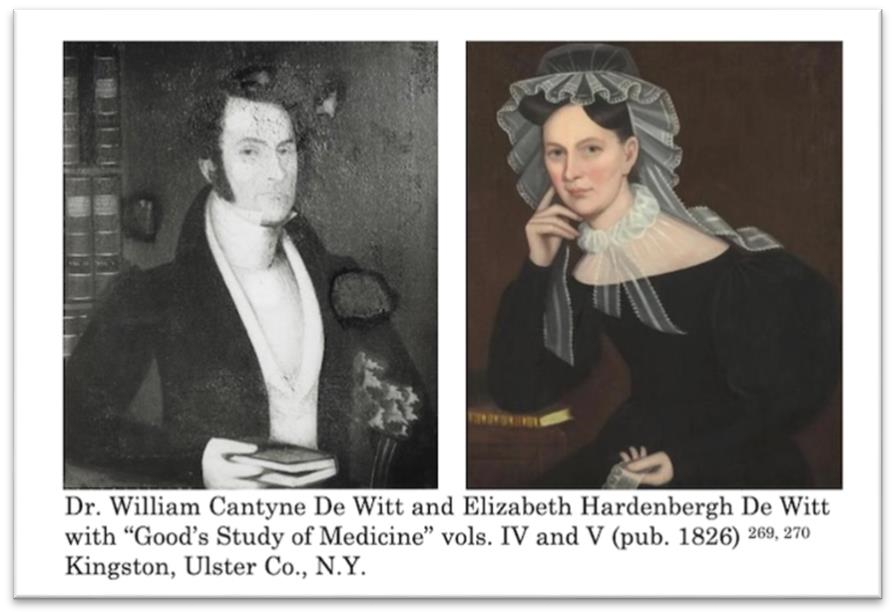
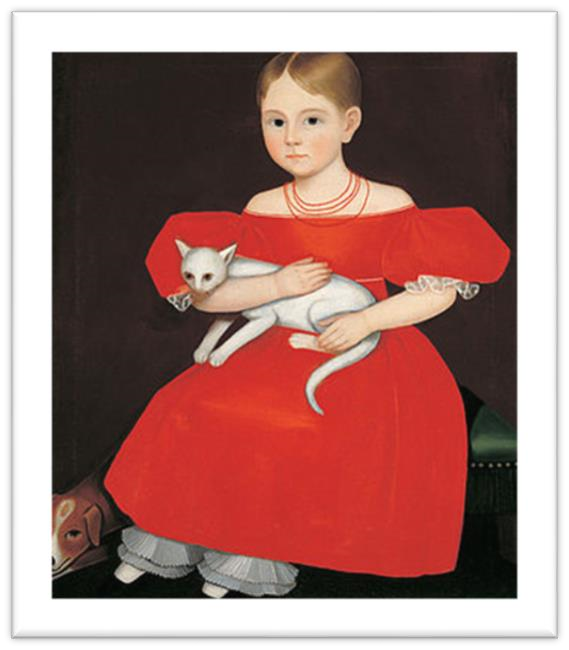
Remarkably, we have portraits of the De Witts painted by the now-celebrated itinerant folk painter Ammi Phillips. You may know Phillips for his portraits of children in red dresses — works that hang today in the Metropolitan Museum of Art and the American Folk Art Museum.
A town named for a small sawyer
By the time the house was built, Saugerties already had nearly two hundred years of European history. The first settler here was a Dutch sawyer named Barent Cornelis Volge — apparently not a tall man, since the area came to be called De Zaagertjes, “the little sawyer.” Zaagertjes became Saugerties through the same patient anglicization that turned Breukelen into Brooklyn.
The Esopus Creek and Sawyer’s Kill — kill is simply the Dutch word for stream, as in Catskill, Fishkill, and Peekskill — powered the village’s mills, and Saugerties grew into a thriving industrial town.
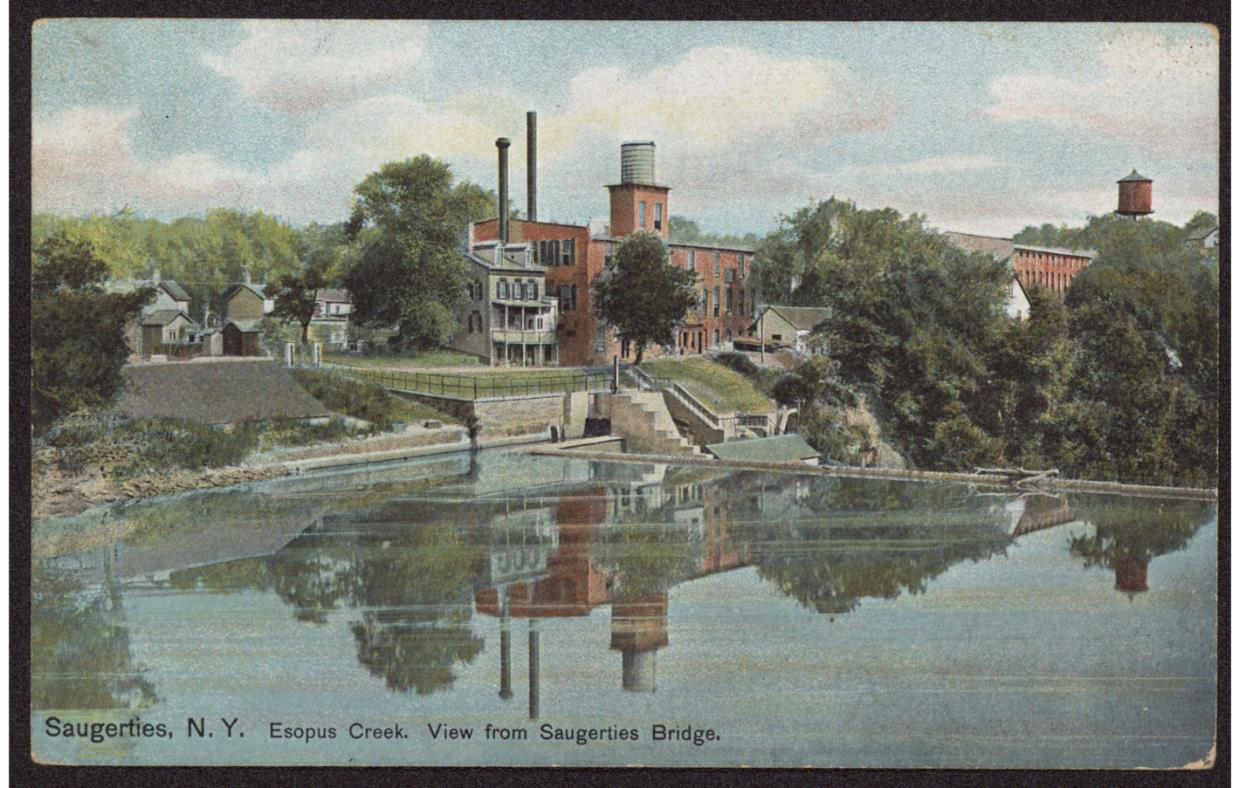
The postcard at the top of this page shows the Cantine Paper Mill on the Esopus around 1906 — what is today Diamond Mills and the Black Barn restaurant, a short walk from the house. By 1870 the house itself had passed to a local lawyer and judge, Carroll Whitaker.
It’s a lot of history for a quiet village street. Come stay in a piece of it.
Where: Saugerties, NY